The Absence of Evidence Is Not Evidence of Absence
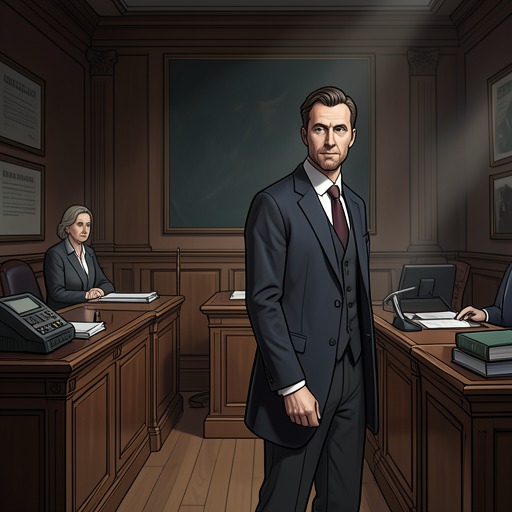
Defending JacobThe Absence of Evidence Is Not Evidence of Absence is a maxim about the limits of inference, invoked during Jacob Barber’s murder trial to address the lack of physical traces linking an attacker to the crime scene. Its force is also its danger: the prosecution uses it to keep open the possibility that a person could have been present without leaving evidence, while the defense insists that an absence remains an absence and cannot itself establish guilt. The courtroom exchange turns a general saying into a dispute over what the case’s physical record can actually prove.
The maxim in the prosecution’s case
During expert testimony, the prosecution asks whether a person can be present at a crime and leave no physical evidence. The answer is yes: a lack of physical evidence proving someone’s presence at a particular time and place does not necessarily prove that the person was absent. The testimony gives the maxim a specific forensic context. Blood might not reach an attacker, depending on the wound and the attacker’s position; a person might also change clothes afterward. The point is not that Jacob did these things, but that the absence of expected traces cannot, by itself, rule out the prosecution’s account.
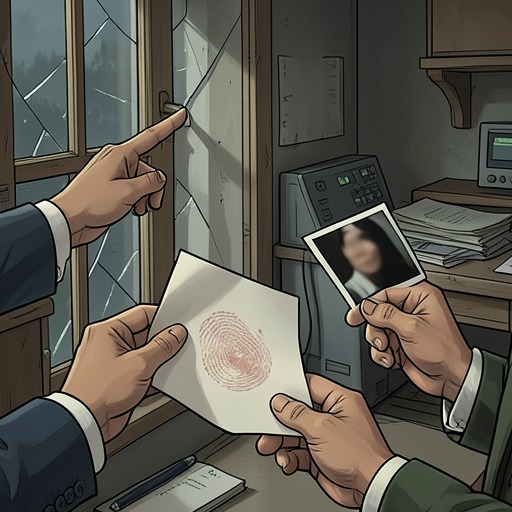
The surrounding evidence makes that distinction consequential. The blood at the scene belonged to Ben Rifkin, and investigators found no nearby fingerprints, handprints, shoe prints, hairs, fibers, blood, or other organic material attributable to another person. The sole exception was Jacob’s fingerprint on a plastic manufacturer’s tag inside the victim’s open sweatshirt. The maxim therefore sits beside a record that is both sharply limited and pointed toward the defendant: it cautions against treating missing traces as proof of absence, but does not establish when Jacob’s print was left.
The defense’s counter-reading
On cross-examination, Jonathan Klein accepts the wording of the maxim but redirects attention to the practical record. He asks whether the absence of evidence is also precisely an absence of evidence. The witness agrees. Klein then enumerates what is missing from the case against Jacob: blood evidence, genetic evidence, handprints, fingerprints, and shoe prints. His wry summary draws laughter from Jacob and Andrew Barber, briefly turning the prosecution’s abstract caution into a defense argument about the scale of the evidentiary void.
The exchange does not disprove the possibility that an attacker could leave no trace. Instead, it separates possibility from proof. The prosecution’s formulation warns that missing evidence cannot necessarily exclude presence; the defense’s response warns that the same principle cannot supply affirmative evidence of presence. The fingerprint remains the exception, but its limitation is central: a fingerprint does not show when it was deposited. Thus the debate leaves the jury with an unresolved question about the meaning of the one physical link amid the many missing ones.
A maxim inside competing trial stories
The forensic dispute belongs to a broader contest over narrative. In his opening, Neal Logiudice presents the killing as the culmination of a lethal temper: Jacob, he argues, was teased and eventually “snapped.” Logiudice acknowledges that the precise trigger may never be known, offering possible insults and bullying as explanations while conceding that he has theories and probabilities rather than a definitive answer. The case narrative is meant to supply the motive that the physical evidence alone cannot explain.
The maxim helps preserve that prosecution story against the absence of other traces, but it cannot fill the separate gap in motive. Andrew Barber observes that jurors want to know why an apparently ordinary boy would commit a brutal crime and that an under-motivated case is difficult to prove. In this setting, a general evidentiary caution acquires rhetorical weight: it can prevent an absence from being treated as conclusive exoneration, yet it does not resolve the competing accounts of Jacob’s character, the alleged bullying, or the reason for the killing.
Significance and limits
The trial’s use of the maxim illustrates how legal argument can turn uncertainty in opposite directions. The prosecution asks the jury not to infer that no attacker was present merely because traces are missing. The defense asks it not to mistake that logical possibility for evidence that Jacob was present. Neither formulation changes the physical record; each proposes a different discipline for interpreting it.
The saying therefore functions less as a solution than as a boundary on inference. It reminds the jury that forensic evidence can be incomplete, while Klein’s cross-examination insists that incompleteness cannot be treated as a substitute for affirmative proof. In a case organized around a disputed fingerprint, an uncertain motive, and rival stories of the defendant, the maxim names the central tension: what the evidence does not show may matter, but it cannot automatically establish what the evidence fails to show.